

Since 2020, the art world has experienced a series of unforgettable events that didn’t just make headlines—they broke the internet. These viral art moments since 2020 have captivated collectors, sparked global debates, and, in some cases, redefined the very nature of art itself.
From record-breaking NFT sales to conceptual provocations and institutional shifts, these moments have dominated collector conversations and reshaped market dynamics. Below, we explore five viral art moments since 2020 that continue to influence how art is valued and collected today.
1. Beeple’s $69 Million NFT Sale Redefines Digital Art (for a while)
In March 2021, digital artist Beeple made history when his Non-Fungible Token (NFT) Everydays: The First 5000 Days sold for US $69.3 million at Christie’s.
This event quickly became one of the most significant viral art moments since 2020, as it:
- Catapulted NFTs into the mainstream
- Attracted a new generation of tech-driven collectors
- Challenged traditional definitions of ownership and scarcity
Collector groups buzzed for weeks, debating whether NFTs represented a lasting shift or a speculative bubble. It seems to have been the latter as the NFT market crashed 70% four weeks after the March 2021 sale of Beeple’s work and one substack author reports that its value (in June 2025) was less than a Hermes bag – it is currently at just under US $50,000 but has a market capitalisation of US $5m.
Why it mattered for collectors:
This moment expanded the scope of collectible art, cementing digital works as an asset class and inspiring the creation of new museums and sections of art fairs dedicated to digital artworks.
2. Banksy’s Shredded Artwork Gains Value
Few viral art moments since 2020 demonstrate the power of narrative quite like the evolution of Banksy’s Love Is in the Bin. The original moment in 2018 occurred at the auction of Banksy’s 2006 painting of Girl with Balloon, which for those in the know was already suspicious given that the image can be found widely on t-shirts and tote bags in London’s Camden market.
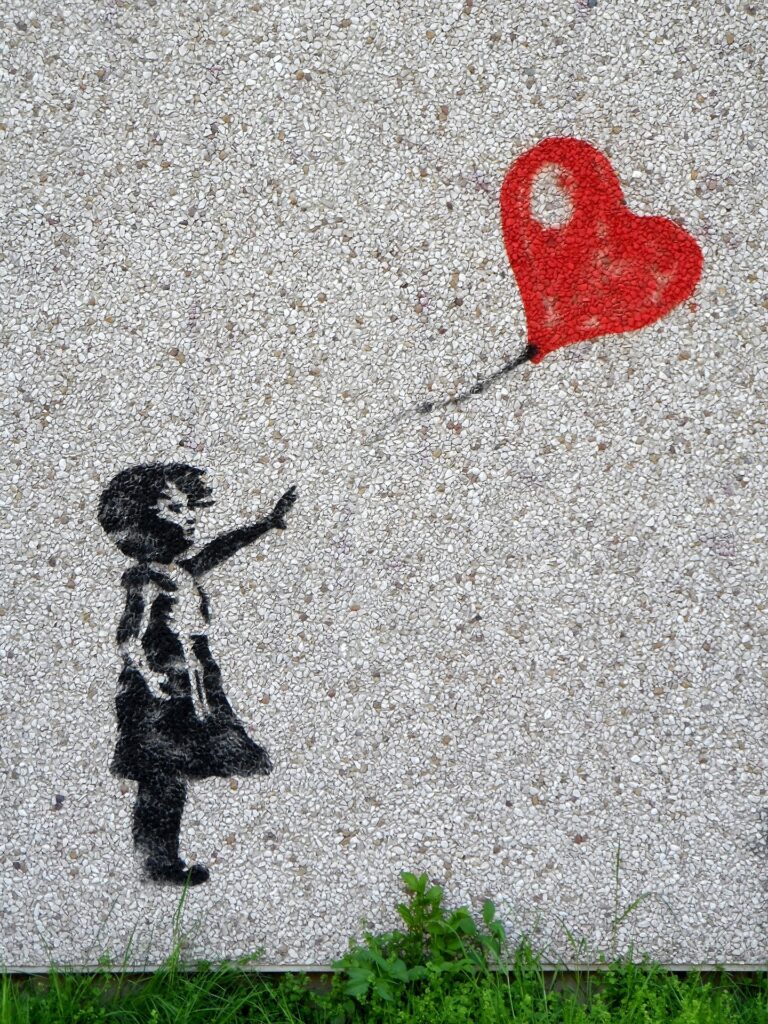
As the gavel fell, the image self-destructed and half of the image was shredded, creating the new work Love is in the Bin.
Banksy has said he prepared the self-destruct mechanism at this time in case the work was ever put up for auction. The shredder stopped when the canvas was about half-way through; Banksy has said this stop was unplanned and that he intended to shred it completely. Sotheby’s said it had no foreknowledge of the mechanism. Immediately after the sale, technicians from Banksy’s team deactivated the shredder, but the mechanics remained in the frame.
The artwork re-emerged as a cultural icon and resold in 2021 for £18.6 million.
The internet was once again captivated by:
- The transformation of destruction into value
- The theatricality of the artwork’s origin
- The enduring appeal of Banksy’s anti-establishment ethos
Why it mattered for collectors:
It reinforced that story and cultural relevance can significantly amplify an artwork’s market value.
3. Maurizio Cattelan’s Banana Sells for Millions—Again
In 2024, Maurizio Cattelan’s Comedian once again became one of the most talked-about viral art moments since 2020 when it reportedly sold for US $5.2 million at a Sotheby’s auction. The moment was also conspicuous because the acquirer paid for the artwork in cryptocurrency and after taking delivery of the work, ate the banana!
Originally dismissed by some as absurd, the work’s continued success sparked renewed online debate:
- Is conceptual art being validated or mocked?
- What exactly constitutes value in contemporary art?
Memes, commentary, and critique spread rapidly across platforms, proving the work’s enduring cultural power.
Why it mattered for collectors:
It highlighted the role of concept-driven art in generating both financial and cultural capital.
4. Aboudia’s Unexpected Market Dominance
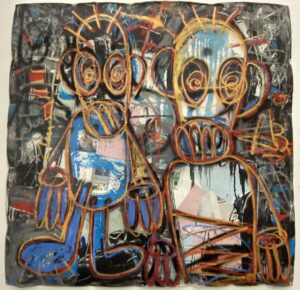
The rise of Aboudia stands out as one of the most surprising viral art moments since 2020. Abdoulaye Diarrassouba, also known as Aboudia, is an Ivorian contemporary artist based in Brooklyn, New York, and who works from his studios in Abidjan and New York City. With street art as a starting point both literally and figuratively speaking rooted in real life and reinforced by schooling in mural art that the young artist received at the Technical Centre of Applied Arts of Bingerville, Aboudia paints the street in the manner in which painting is done in the streets.
In 2022, he became the world’s best-selling artist by volume, beating Damien Hirst, to defy expectations and shift attention toward African contemporary art. The artist counts Charles Saatchi among his collectors.
This moment gained traction because it:
- Challenged traditional art market hierarchies
- Reflected changing collector priorities
- Amplified global interest in underrepresented regions
Why it mattered for collectors:
It signalled the importance of diversifying collections and paying attention to emerging markets.
5. The Met’s Acquisition Sparks Global Conversation
Not all viral art moments since 2020 have been driven by spectacle. In 2023, the Metropolitan Museum of Art made headlines with its acquisition of a rare portrait of an enslaved child. The sleuthing work of Jeremy K. Simien, an art collector from Louisiana in the United States, helped uncover the backstory behind this figures in the painting, He had seen the image online in 2013 and acquired it in 2021, investing in further restoration prior to it being acquired by The Met.
When the painting was de-accessioned by the New Orleans Museum of Art, the 19th century painting had three white children in a Louisiana landscape with the black child, later identified as Bélizaire, was missing, suspected to be covered up around the late 1800s or early 1900s. A 2005 restoration revealed him.
This moment resonated widely because it:
- Challenged historical narratives within major institutions
- Sparked discussions around representation and restitution
- Highlighted the growing importance of socially significant works
- Adds a spotlight on the patrons who invest in collection management activities such as restorations and researching of works to add to their context and cultural value
Why it mattered for collectors:
It underscored the opportunity in the dedication and perseverance of art collectors in unearthing historical and cultural gems about the artworks in their collections.
Bonus moment: AI Instagram account’s post on the financialisation of the art world
In March 2026, an account on Instagram, suspected to be creating AI-generated content, got collectors’ tongues wagging as it asked the question, “Why do billionaires pay millions of dollars for paintings that look absolutely terrible? It’s not because they love ugly art…” The account outlines the use of tax rules and donation allowances in certain jurisdictions which drive the eye-wateringly high valuations of some paintings and the use of freeports. Ostensibly, these actions solidify those art actors’ role in treating art as an asset class.
Art historian and curator Carrie Scott highlights the many ways in which such posts are scams and play on the increasing interest in gambling to capture attention, while at the same time minimising the important role of art for the purpose of supporting culture and the fact that bashing art as ugly has no place in our global art ecosystem.
Why it mattered for collectors:
Most collectors live in jurisdictions which do not have the tax and donation rules that can drive up values in the same way as others. So most collectors really are doing it for the culture. That said, it is important for collectors to have context as to the forces as play in some spaces in the market.
Final Thoughts
These viral art moments since 2020 are more than just fleeting headlines—they are indicators of deeper shifts within the art world, and often help grow the collector base or at least those who start taking an interest in the art market.
For collectors, understanding these moments offers valuable insight into emerging trends, new markets, and the evolving definition of value in contemporary art. Join Capital Art to track market-moving trends, support your collection management journey as you build a future-focused collection, and to discover interesting artists.